Arthur Howard
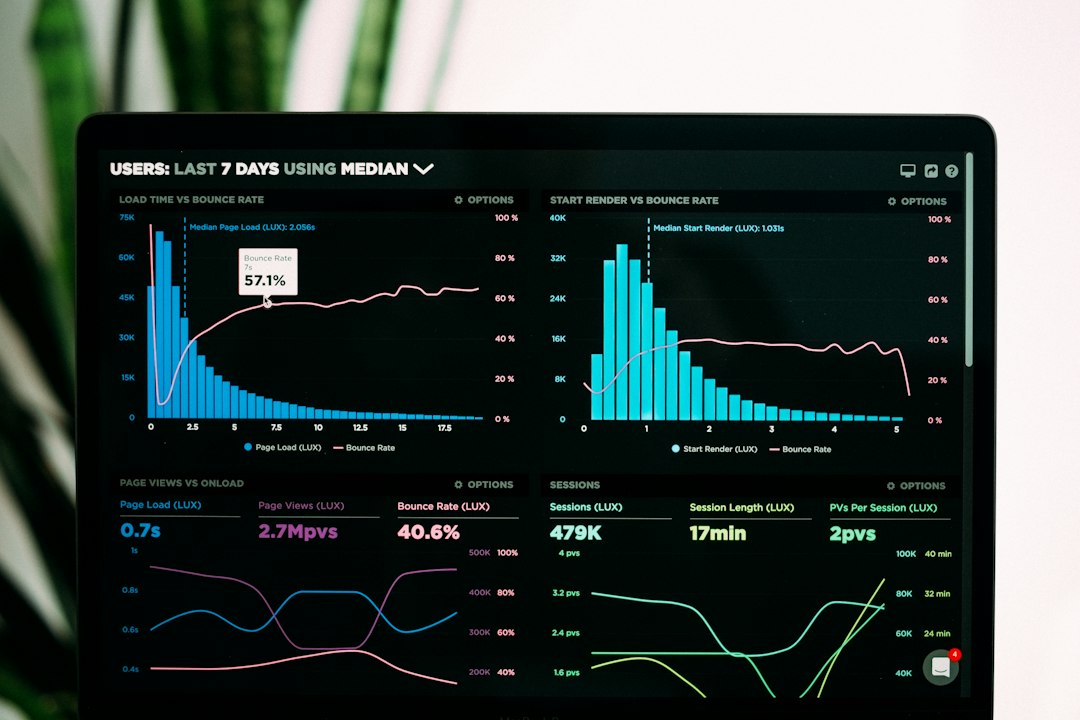
Financial trading increasingly depends on digital tools that can organize information from several markets in one environment. Traders now expect convenient access to price charts, market observations, account information, and trading functions without being restricted to a single physical workstation. A browser-based environment can support this flexibility while keeping important analytical features within reach. For this purpose, meta trader online offers a web-access approach that can help traders study supported instruments, monitor market activity, and maintain a more organized trading workflow.
In This Article
- What Makes Online Trading Relevant to Modern Traders?
- How Does Multi-Market Trading Work?
- Why Is Market Data Important?
- What Role Do Charts Play in Statistical Analysis?
- Can Different Markets Be Compared?
- How Does a Watchlist Improve Organization?
- What Should Traders Know About Market Sessions?
- Why Is Risk Management Essential?
- How Can Historical Records Improve Strategy Development?
- What Is the Role of Automation?
- How Can Traders Avoid Information Overload?
- What Should Beginners Study Before Trading?
- How Does a Data-Driven Trading Routine Look?
- What Should Users Review Before Choosing an Online Trading Environment?
- Why Does Professional Organization Matter?
- Final Perspective
What Makes Online Trading Relevant to Modern Traders?
Online trading connects financial market participation with internet-based technology. The development of browser interfaces has reduced dependence on locally installed applications and made account access more flexible.
A web-based environment can be useful for traders who move between workspaces or devices. Instead of treating the trading platform as a fixed workstation, users can approach it as an accessible digital environment for market observation and account management.
However, online convenience should always be considered alongside account security, connectivity, execution conditions, and the rules applicable to the financial service being used.
How Does Multi-Market Trading Work?
Multi-market trading involves monitoring or trading instruments from different market categories through an available trading environment. Depending on the account and provider, available markets may include currencies, indices, commodities, shares, or other financial instruments.
The important factor is that availability can differ between trading accounts and jurisdictions. A platform interface may support particular functions, while the financial provider determines which instruments are actually accessible.
For this reason, traders should review the available instrument list rather than assuming that every market is offered through every account.
Why Is Market Data Important?
Market data provides the foundation for analysis. Current prices, historical movement, trading activity, economic information, and other available data can help traders form a structured view of market conditions.
Data becomes more useful when it is interpreted consistently. Traders can compare current conditions with historical behavior, examine price structures, and observe whether particular patterns appear across different markets.
However, data should not be mistaken for certainty. Market prices reflect changing expectations, and unexpected developments can alter conditions quickly.
What Role Do Charts Play in Statistical Analysis?
Charts transform market data into visual information. They allow traders to examine direction, volatility, consolidation, reversals, and recurring price structures.
A data-focused trader may use charts to establish measurable observations rather than relying entirely on intuition. For example, historical price behavior can be reviewed to determine how often certain conditions appeared within a selected dataset.
The purpose is to create evidence for a trading hypothesis. Statistical observations should be tested carefully and should not be presented as guarantees of future performance.
Can Different Markets Be Compared?
Yes. Comparing markets can provide additional context during analysis. Traders may examine whether related instruments are moving together, diverging, or responding differently to the same economic environment.
Cross-market comparison can also help identify broader themes. Currency behavior, commodity movement, and equity-index activity may sometimes provide complementary information.
Correlation should nevertheless be treated as a changing relationship. Two instruments that historically move together may behave differently when market conditions change.
How Does a Watchlist Improve Organization?
A watchlist provides a practical way to monitor selected instruments without opening every available market individually. Traders can organize instruments according to strategy, asset category, geographic region, or trading session.
The benefit is not simply convenience. A focused watchlist can reduce information overload and encourage traders to concentrate on markets that meet predefined criteria.
An effective watchlist should be reviewed periodically. Instruments can be removed when they no longer meet the trader’s analytical requirements, while new markets can be added when they become relevant.
What Should Traders Know About Market Sessions?
Financial markets operate according to different schedules, and some instruments may experience greater activity during particular periods. Understanding trading sessions can help traders interpret changes in liquidity and volatility.
A trader monitoring several markets should know when relevant markets are active and when important economic events are scheduled.
This information can be especially useful when comparing instruments across regions. A market may appear quiet during one period and become significantly more active when another major financial session begins.
Why Is Risk Management Essential?
Risk management provides structure around trading decisions. It addresses how much exposure a trader is prepared to accept, how positions will be monitored, and under what conditions they will be closed.
A professional process can include predefined rules for position sizing, diversification, protective orders, and maximum exposure.
The objective is not to eliminate risk. Financial markets cannot be made risk-free through technology. Instead, risk management helps ensure that individual decisions remain consistent with the trader’s broader plan.
How Can Historical Records Improve Strategy Development?
Historical records allow traders to examine how previous decisions were made and what happened afterward. When enough observations are collected, patterns may become easier to identify.
A trader can evaluate entry timing, exit timing, instrument selection, market conditions, and strategy adherence. This creates a more objective basis for reviewing performance.
Historical analysis should be conducted carefully. Results from a particular period may reflect unusual market conditions and may not represent future environments.
What Is the Role of Automation?
Some trading environments support automated strategies or algorithmic functions, depending on the platform and account configuration. Automation can execute predefined instructions without requiring manual intervention for every market event.
The key requirement is understanding the logic behind the automated process. An automated strategy can execute rules consistently, but it cannot independently determine whether those rules remain appropriate for changing market conditions.
Testing, monitoring, and periodic evaluation are therefore important components of responsible automation.
How Can Traders Avoid Information Overload?
Access to extensive market information can be both useful and challenging. Too many indicators, charts, news sources, and watchlists can make decision-making unnecessarily complicated.
A professional approach prioritizes information. Traders can identify a small group of indicators or analytical methods that directly support their strategy and avoid adding tools without a clear purpose.
Clarity is particularly important when monitoring multiple markets. The objective is to identify relevant information quickly rather than collect every available data point.
What Should Beginners Study Before Trading?
New traders can begin by learning basic market terminology, chart interpretation, order types, risk management, and the characteristics of the instruments they intend to monitor.
A practice environment can provide an opportunity to understand platform navigation without immediately exposing the trader to the consequences of live decision-making.
Beginners should also understand that financial markets contain uncertainty. No chart pattern, indicator, automated system, or historical dataset can guarantee a particular outcome.
How Does a Data-Driven Trading Routine Look?
A structured routine may begin with reviewing market conditions and scheduled economic events. The next stage can involve screening selected instruments, examining charts, assessing risk, and documenting potential scenarios.
If a trade is taken, the trader can record the reasoning and later compare the original plan with the actual outcome.
Over time, this process creates a dataset that can be reviewed for consistency. The emphasis shifts from individual emotional outcomes toward measurable decision quality and adherence to established rules.
What Should Users Review Before Choosing an Online Trading Environment?
Users should examine the available markets, platform functionality, account requirements, security procedures, execution policies, and applicable legal information.
Device compatibility and internet reliability should also be considered. Traders who rely on browser-based access need a stable connection and should understand what happens if connectivity is interrupted.
Reading official account documentation before trading can help clarify responsibilities, available services, and relevant limitations.
Why Does Professional Organization Matter?
Professional trading is not defined by the number of screens, indicators, or instruments being monitored. It is better understood through the quality of the process.
A well-organized trader can identify relevant information, document decisions, control exposure, and review results systematically. These habits make it easier to recognize both strengths and weaknesses in a trading approach.
Technology can support every stage of this process, but responsibility remains with the individual trader.
Final Perspective
Online multi-market trading combines digital accessibility with tools for research, chart analysis, monitoring, and position management. A centralized environment can make it easier to study different financial instruments while maintaining a consistent workflow.
The data generated through market activity can also support meaningful statistical review. Historical records, watchlists, chart observations, and trading journals can help transform experience into structured information.
The most practical use of an online trading platform is therefore not simply faster access. Its greater value lies in helping traders organize market information, maintain disciplined processes, and evaluate decisions through evidence. When technology is combined with research, risk awareness, and continuous learning, it can become a useful component of a structured approach to modern financial market analysis.
The Short Version
- Financial trading relies heavily on digital tools that provide a comprehensive view of multiple markets in a single environment.
- Meta trader online offers a web-based approach that allows traders to monitor market activity and manage their accounts flexibly across different devices.
- Market data, which includes current prices and historical trading activity, is crucial for traders to analyze market conditions and develop structured strategies.
- Charts convert market data into visual information, enabling traders to identify patterns and make more informed decisions based on evidence rather than intuition.
- A watchlist helps traders focus on selected instruments while minimizing information overload, allowing for better monitoring and analysis according to specific criteria.
- Effective risk management involves defining exposure limits and maintaining consistency in trading decisions, rather than eliminating risk completely.


 Roger Sanders